AMD has launched the 5th Gen AMD EPYC™ 9005 Series, formerly codenamed “Turin.” Built on the new Zen 5 and Zen 5c architectures, these processors deliver record-breaking performance, industry-leading efficiency and AI-optimized capabilities for the modern data center.
Engineered for Modern Workloads
Data centers today must balance business-critical applications with AI, cloud and virtualization. The 5th Gen EPYC processors provide:
Up to 192 cores / 384 threads per CPU
Up to 2.7x higher performance compared to competing CPUs
17% better IPC for enterprise and cloud workloads
37% higher IPC for AI and HPC applications
Purpose-Built for AI
AI workloads demand both raw throughput and efficient data handling. With full 512-bit datapaths, pipeline optimizations and expanded compute units, the new EPYC processors deliver leadership AI performance on CPU-only workloads, while providing faster host CPU performance in GPU-accelerated clusters.
Benefits include:
Higher inference throughput for CPU-based AI
Faster host CPU performance in GPU-accelerated systems
More tokens per second in generative AI models
Shorter training times for large-scale workloads
Efficiency and Consolidation
Modernizing with EPYC 9005 enables infrastructure consolidation:
Replace 100 legacy dual-socket servers with just 14 dual-socket EPYC servers
69% lower power consumption
Up to 65% lower total cost of ownership (TCO) over three years
Technical Highlights
Core scalability up to 192 cores / 384 threads per CPU
Zen 5 and Zen 5c core architectures
12 DDR5-6400 memory channels per CPU
Up to 160 PCIe Gen 5 lanes
AVX-512 support with full 512-bit datapath
Trusted I/O and confidential computing features
A New Standard for Data Centers
The 5th Gen EPYC™ 9005 Series redefines performance and efficiency for enterprise IT, AI-driven applications and high-performance computing. By consolidating workloads, accelerating insights and cutting costs, AMD once again sets the pace for the future of data centers.
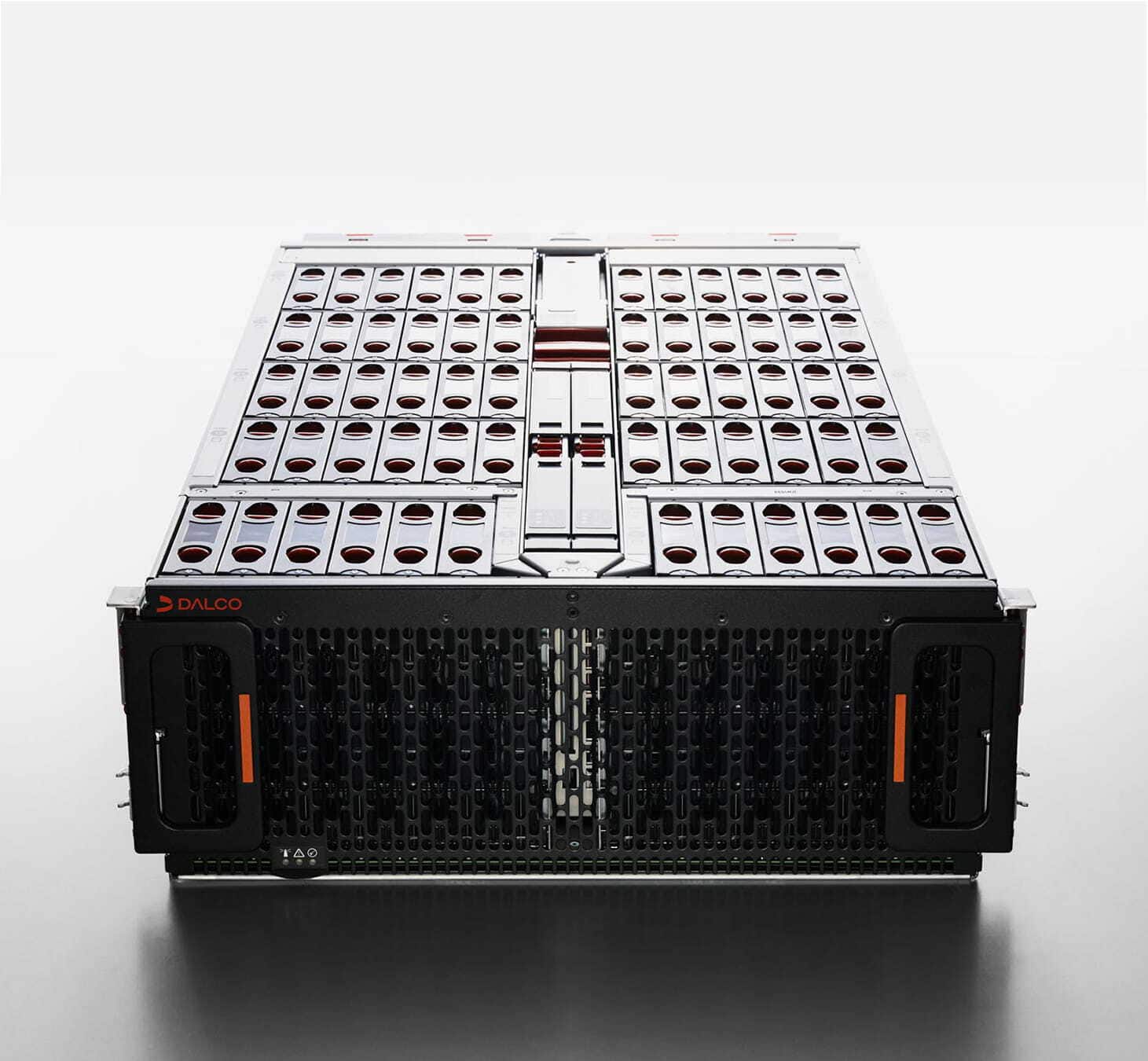
Available at DALCO
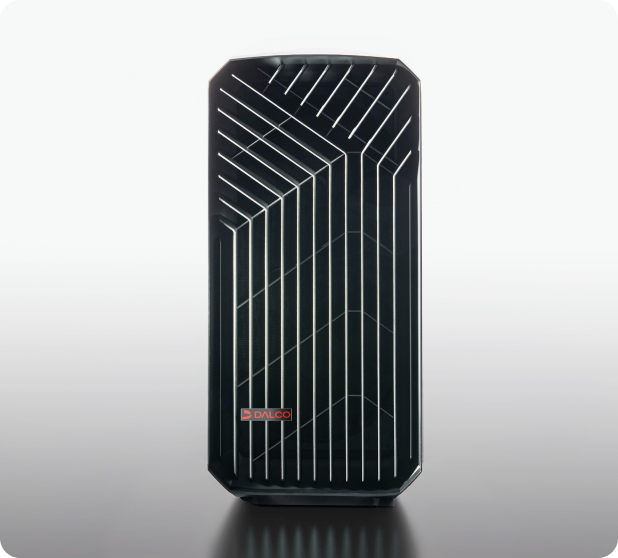
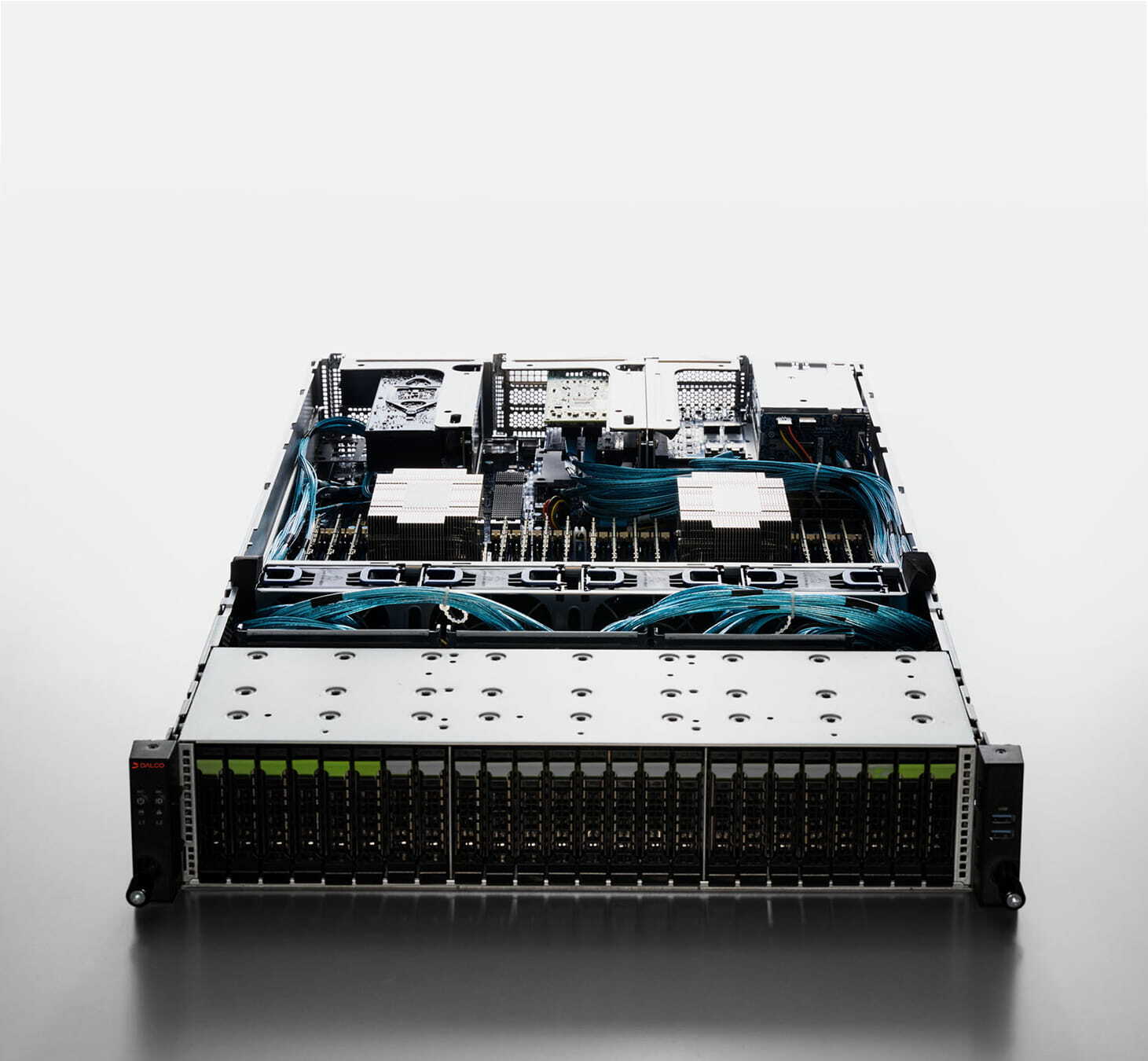
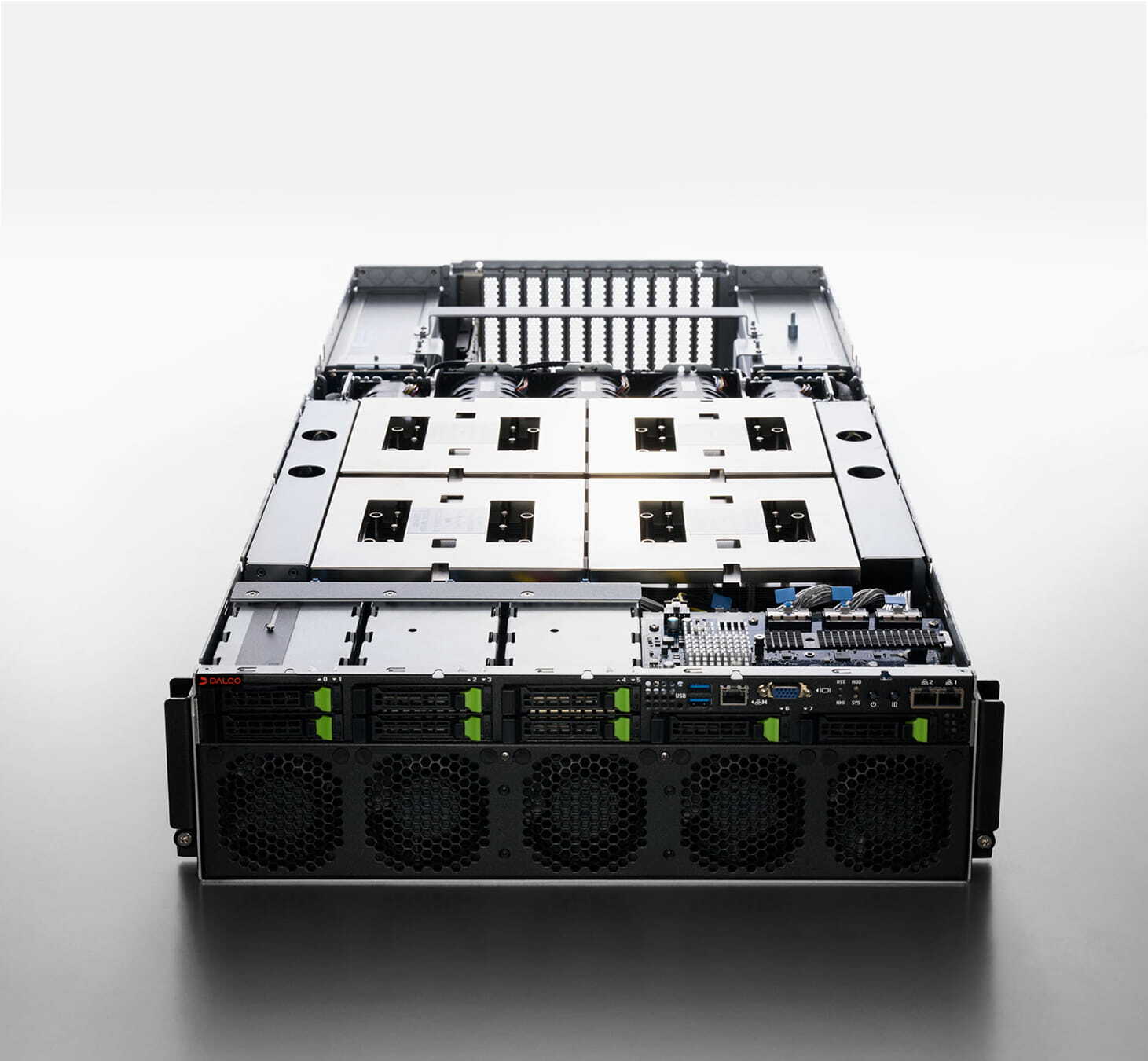
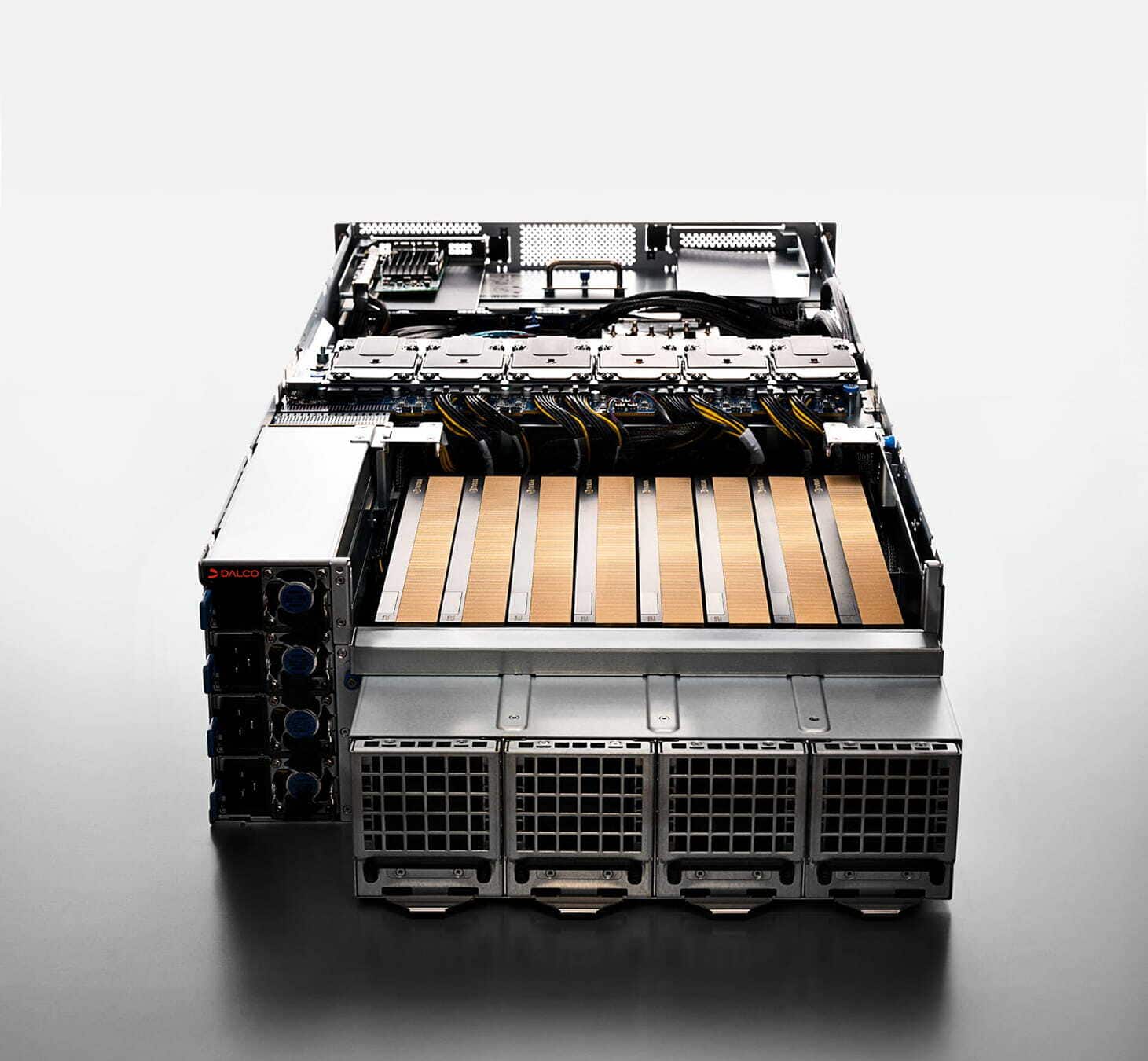
All DALCO workstations and servers can now be equipped with the latest AMD EPYC™ 9005 5th Generation processors to meet the highest demands in performance and efficiency.
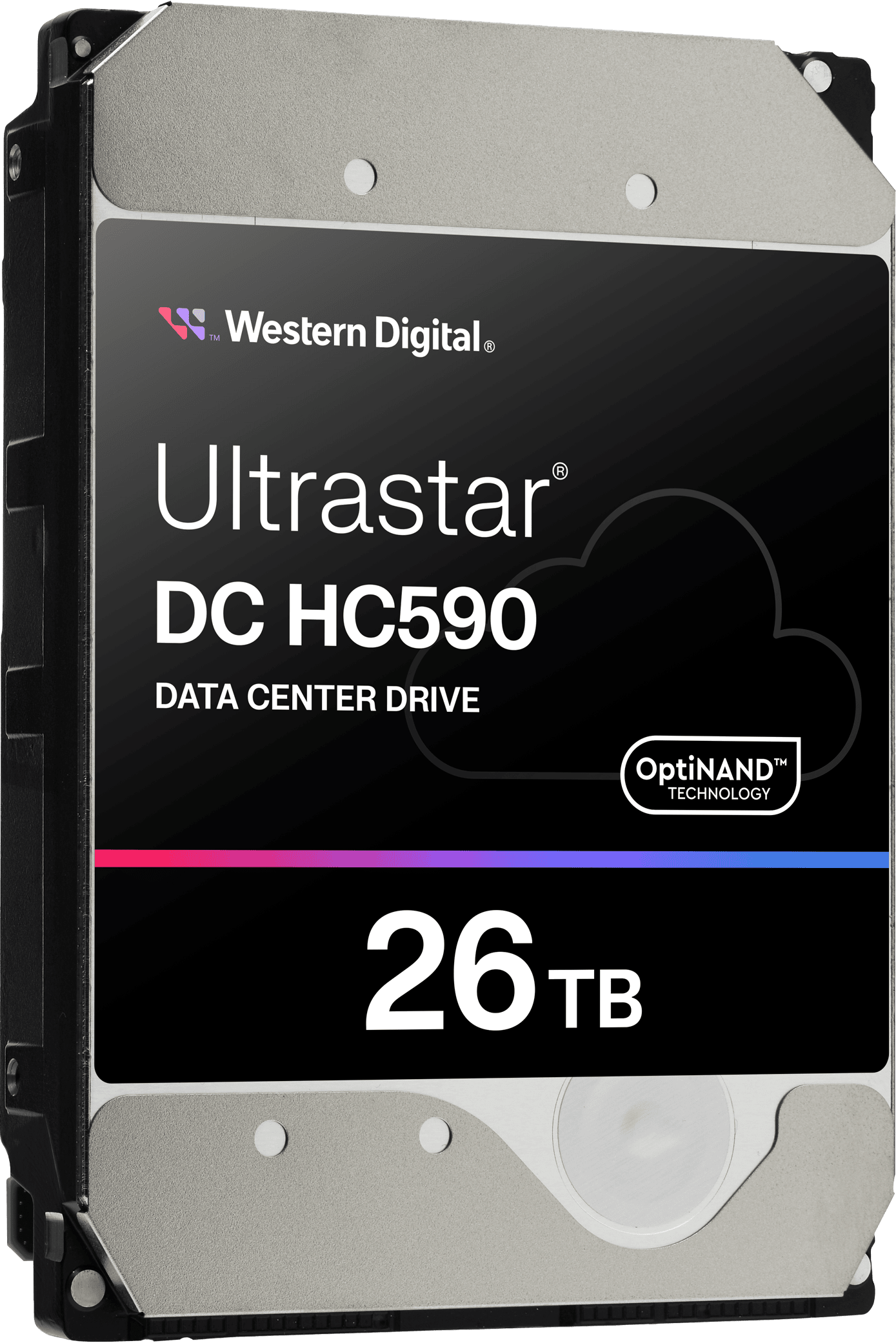
The world’s first 11-disk HDD platform delivers unbeaten capacity of up to 26TB (CMR) to help quench customer’s insatiable demand for increased storage density in the existing storage footprint.
Rapid Qualification and Rock Solid Reliability
Leveraging field-proven hardware and firmware designs from generations of highly successful products ensures easy qualification, seamless integration and rapid adoption while maintaining superior dependability and reliability.
Maximum Rack-Space Efficiency
The higher storage density provided by 11 disks combined with our exclusive energy-assisted Perpendicular Magnetic Recording (ePMR) technology, which increase tracks-per-inch (TPI), allows data centers to maximize their storage efficiency.
Protected Against Vibration and Shock
Our exclusive Rotational Vibration Safeguard (RVS) uses dual sensors to anticipate and counteract disturbances, maintaining peak performance in high-vibration environments. Combined with Dynamic Fly Height technology, Western Digital offers exceptional drive reliability and protection from unexpected shock events.
Engineered with Industry-Leading Technology
Western Digital’s proprietary OptiNAND™ technology leverages integrated iNAND® embedded flash to perform key housekeeping functions, freeing up more capacity and improving the overall drive performance.
Powerful Performance and Resiliency
Choose ArmorCache™ write cache disabled (WCD) mode for increased random write performance or select write cache enable (WCE) mode to protect cached data in case of Emergency Power Off (EPO) or unexpected power loss scenarios.
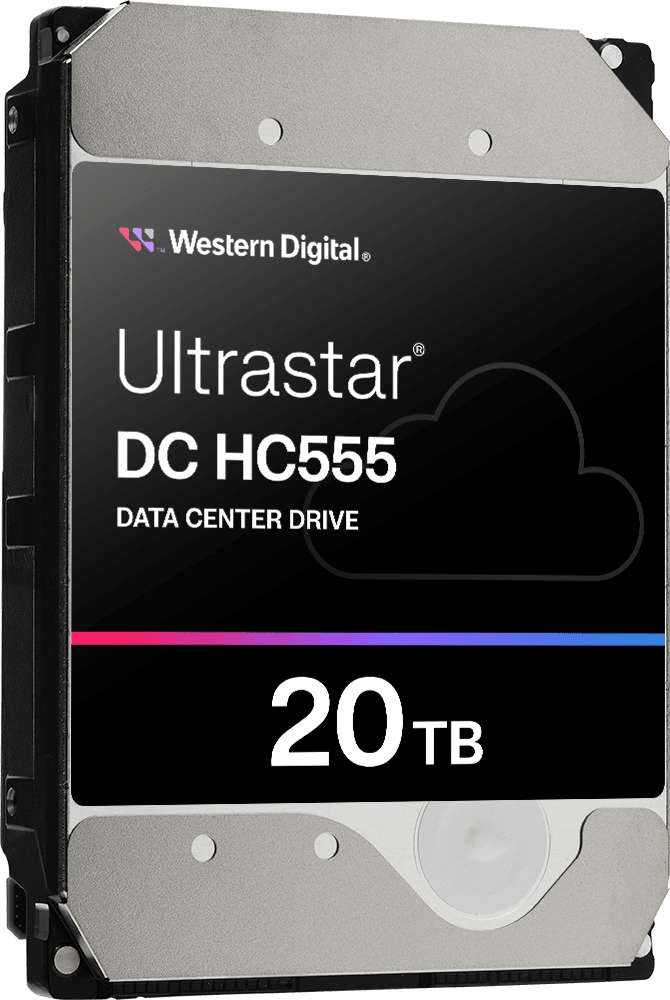
Ultrastar® DC HC555
Handle Data Center Workloads with Proven Technology
The combination of field-proven hardware with the latest innovative technologies delivers the performance, capacity and reliability needed to handle high-intensity workloads in 24×7 multi-user data center environments.
Grow Capacity while Lowering Costs
Western Digital’s energy-assisted perpendicular magnetic recording (ePMR) technology enables customers to grow capacities while lowering TCO (total cost of ownership) including both $/TB and OpEx.
Rapid Qualification and Integration
Combining hardware designs from generations of highly successful products with Conventional Magnetic Recording (CMR) technology ensures easy qualification, seamless integration and rapid adoption by existing customers.
Increase Density with Low Power
Western Digital’s Triple-Stage Micro Actuator increases tracks-per-inch (TPI) while providing greater control over the actuator arm, enabling the highest capacities with low power.
Protected Against Vibration & Shock
Our exclusive Rotational Vibration Safeguard (RVS) uses dual sensors to anticipate and counteract disturbances, maintaining peak performance in high-vibration environments. Combined with Dynamic Fly Height technology, Western Digital offers exceptional drive reliability and protection from unexpected shock events.
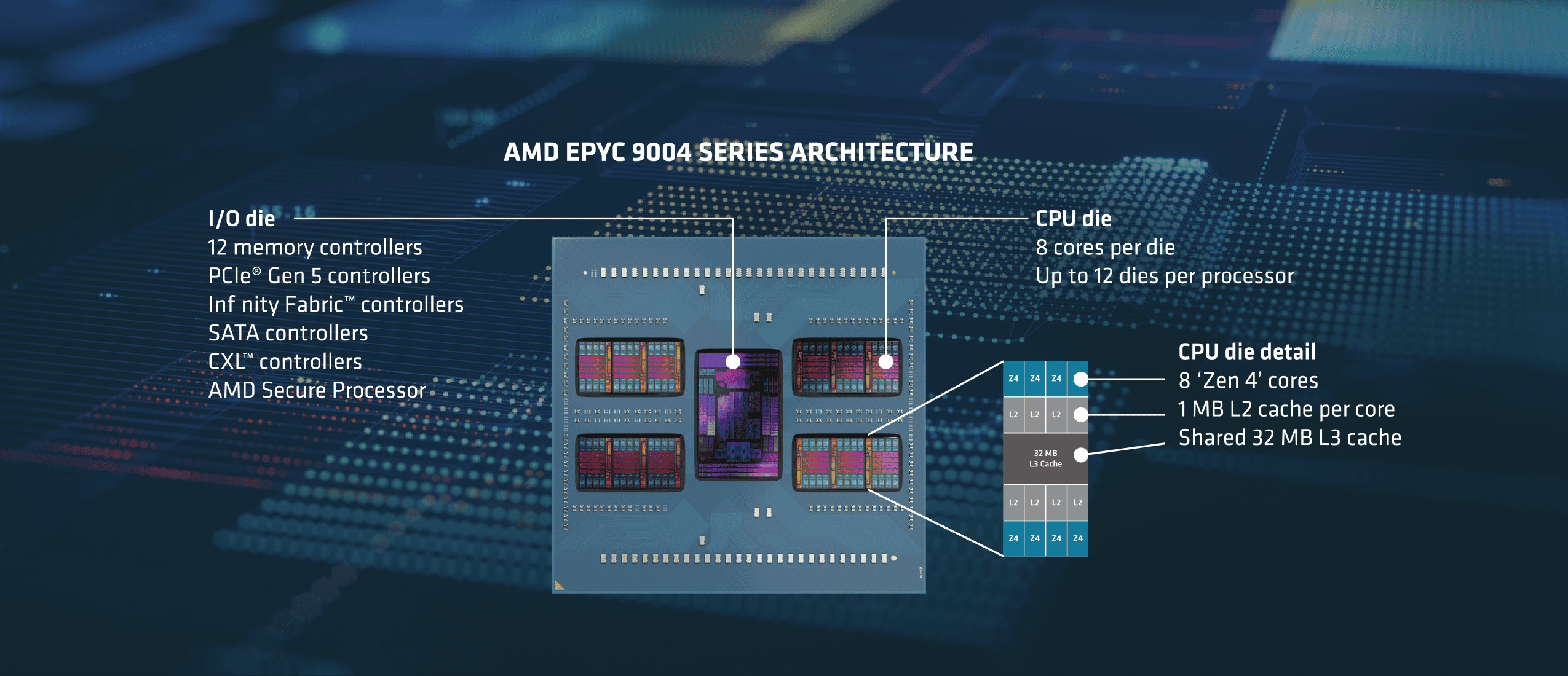
Today AMD announced the general availability of the 4th Gen AMD EPYC™ processors with unmatched performance for critical workloads across cloud, enterprise and high performance computing.
The 4th Gen AMD EPYC processors bring next-generation architecture, technology and features to the modern data center. Built on the “Zen 4” core, the highest performance core ever from AMD, the processors deliver leadership performance, energy efficiency and help customers accelerate data center modernization for greater application throughput and more actionable insights.
“Choosing the right data center processor is more important than ever and 4th Gen EPYC processors deliver leadership in every dimension,” said Dr. Lisa Su, Chair and CEO, AMD. “The data center represents the largest growth opportunity and most strategic priority for AMD and we are committed to making AMD the partner of choice by offering the industry’s broadest portfolio of high-performance and adaptive computing engines. We have built the best data center CPU roadmap in the industry and with 4th Gen EPYC we deliver another major step forward in performance and efficiency to make the best server processor roadmap even better. ”
Accelerating Results and Driving Actionable Insights for Businesses
4th Gen AMD EPYC processors are designed to deliver optimizations across market segments and applications, while helping businesses free data center resources to create additional workload processing and accelerate output.
With 4th Gen AMD EPYC processors, businesses can:
Support Performance and Efficiency. With up to 96 cores in a single processor, the new AMD EPYC processors can enable customers to deploy fewer and more powerful servers to continue to meet their compute needs. This allows them to drive greater flexibility within the data center that can be leveraged to address business sustainability goals and drive real-world dividends.
Help Keep Data Secure. Through a “Security by Design” approach, AMD continues to deliver enhanced security features in x86 CPUs. The 4th Gen AMD EPYC processor series expands on AMD Infinity Guard, a cutting-edge set of features that offers physical and virtual layers of protection. With 2X the number of encryption keys compared to previous generations, 4th Gen EPYC processors help customers keep data secure, whether it is stored locally, in the cloud, or residing in storage.
Use the Latest Industry Features and Architectures. These processors continue to provide customers with an “all-in” feature set, with customers just needing to pick the core count and frequency that matches their workload needs. The 4th Gen AMD EPYC processor introduces support for DDR5 memory and PCIe® Gen 5, which are critical for AI and ML applications. In addition, 4th Gen AMD EPYC processors support CXL® 1.1+ for memory expansion, helping customers to meet demands for larger in-memory workload capacity.
All of these features and capabilities ultimately enable customers to use the 4th Gen EPYC processors to drive infrastructure consolidation with similar or better performance; thereby helping reduce the costs and energy consumption of their data center.
A very high profile security issue of the log4j library, registered as CVE-2021-44228, dubbed as “log4shell” keeps admins on their tows to get their systems sorted out and updated as soon as possible.
This article is meant to answer some of the questions we have been getting regarding log4j and mainly how it impacts high performance clusters.
a basic understanding of the issue at hand
To find the remedy, we need to understand the problem. Log4j is a java library. Two important things to notice here:
it is for JAVA applications, so only java applications are directly affected by this issue and
Log4j is a library, not an application!
Log4j versions 2 to 2.15 have a vulnerability that allows to execute code on the machine where the application using log4j is running. Log4j is used to log information within an application and write log files. The vulnerability dubbed log4shell is a bug, where writing some crafted log entries could lead to commands being executed on the machine where the software using log4j is running, with the user rights of the user that’s running that application. The reason why this is such a high profile security issue is, that under certain circumstances, it is extremely easy to inject such crafted code into the log message. For example apple was initially targeted by changing the name of an iphone to a crafted string that would then hit this vulnerability. So in other words, under certain situations, it is extremely easy to exploit this bug and that makes it very dangerous, because attackers can act quick to leverage the vulnerability.
This issue affects servers that are publishing services, such as for example web services or databases etc. to users who are not authorized to login to the server and run their own software on the server. For a user that already has ssh access to a shell of a server, there is very little to gain by exploiting a log4shell affected application. The only danger that log4shell poses in such scenarios is, if a tool running with higher privileges than what the user has can be exploited. Such tools could be monitoring tools that must run as root in order to access the hardware that they are monitoring for example.
So does this only affects web-services written in java? No, because user input could also be fed into an application by modifying data that is later processed by a vulnerable application. Let’s say, you have a web-application that has a search field. Your Web application is written in something other than java, so you should be safe. But lets suppose you store each search query to a database, because later on you want to analyze what people are searching most on your application in order to improve the user experience in the future. To analyze the data, you use another software that will read all these search queries from the database and then process them in one way or another. Unfortunately that application is written in java and uses log4j to write debug-logs for the developers to improve the inner workings of the application. Now suddenly you have user input hitting a java application that is not directly exposed to the outside.
what are we looking for then?
To asses if a system is vulnerable through the log4shell issue, we have to first of all find all applications on our system that use log4j between version 2 and 2.15. The challenge here is that Java applications are distributed as jar archives which may contain also all the dependencies of that application, so all libraries. A jar file can also contain more jar files which in turn contain software and its dependencies. This means we have to really iterate through all levels of a jar archive in order to collect all the components provided with a java program. Because log4j is a library, it may very well hide in a jar several levels deep.
how do we find all these applications on our system, that use the Log4j library?
this is for Linux systems only, but the main tool we use here (syft) is also available for windows and the other tools have probably alternatives available on windows as well. Our approach to finding most or hopefully all occurrences of log4j on a system is the following:
we use find to locate all .jar, .war and .ear files on a system.
we then use an open source tool called syft to analyze the contents of these files. syft can output detailed information about a software package in json format.
we then use the command line json processor “jq” to query the output of syft to find occurrences of log4j and list them together with the name, version number and path of the software package that contains the library.
both syft and also jq are not usually part of a standard linux installation, so you may have to install those tools first. JQ is usually available via the package manager of the distribution, so a simple yum install jq
or apt install jq
will most probably do the job.
syft provides a one-liner on the https://github.com/anchore/syft github page that will install it. If your system does not have internet access, you can also download the respective rpm or deb package for your distribution and install that instead. Just look at the releases page.
Once these two dependencies are installed, you can use this linux command (enter it all at once, it is basically a one-liner split into multiple lines for better readability) to scan all the files on your system with the before mentioned method. It will also create a file called /tmp/jarfiles in case you want to run some further analysis on all jar files you have found in the future. It also saves all the output to /tmp/log4j, just in case it finds more than your screen buffer can scroll back :). Keep in mind that this command can take very long, depending on how much data you have on your sytem. So you might want to run this in a “screen” or “tmux” session. find / \ -regex '.*\.\(war\|jar\|ear\)' \ -exec /bin/bash -c '\ echo "{}" >> /tmp/javafiles;\ syft packages file:"{}" -o json 2>/dev/null | \ jq -r ".artifacts[] | \ select(.name|test(\"^log4j\")) | \ [.name, .version, .locations[].path] | \ @tsv"' \ \; | \ tee -a /tmp/log4j
if you want to only scan a specific folder, replace the first “/” after the “find” command with the path to the desired folder.
the list generated by this command will show you probably all occurrences of log4j on your system. it also includes versions below 2 which under some more complex circumstances could be dangerous but most probably aren’t and it includes log4j-over-slf4j which by itself is not an issue unless an affected log4j version is found in the same package.
so I found some occurrences, what should I do now?
First of all, check if there is an update for the software that’s using log4j that fixes the vulnerability (usually by using a newer than 2.15 version of log4j). If there is and if you can, upgrade to the newer version.
If however you can’t upgrade, you need to analyze, if this vulnerability is even an issue in this specific software and use case. If the software in question is a solver application for some simulations that you are running on a cluster which is only used by yourself and where you aren’t afraid of a privilege escalation carried out by a very competent co-worker who also has access to the system, it is probably safe to leave the software as is and continue using it. If all your system users have shell access anyway (such as on an HPC cluster) and there are no exposed services other than ssh, make sure the application in question is not run as root and you are most likely fine too. However, if you can’t say for sure that it won’t be an issue, you can either try to google for a workaround but most probably what you should do then is just to remove the software from your system until there is an update. In the case of services, you can also stop the service and disable it until there is an update.
some comments on other search methods we have seen recommended:
One very popular tool that we have seen mentioned by many people seems to be the log4j_checker_beta by rubo77 on github. It certainly is a start but this tool is incomplete in some ways which may give a false sense of security in some cases. First of all, it uses “locate” to find java files on the target system. Locate is a file indexing tool on Linux which comes with a tool called “updatedb” to regularly scan the system for new files and add their names to a database. Later, locate can query the database for a filename or expression to find files on the system quickly. The log4j_checker_beta tool warns, that your locatedb might be outdated and that you should update it prior to running the tool, however, if you don’t have the mlocate package installed and there is no locate program available, it does not warn about anything. Instead, it falls back to using “find”, a tool that simply crawls all your directories and searches for files. This is much slower but much more complete way of finding a file. Because find is so much slower, the script only searches for java files in certain directories, where they often reside on Linux, such as “var”, “bin” and so on. But as soon as you have other paths where you installed software for one reason or another, it won’t find it unless you have an up to date locatedb and sadly it does not tell you if you don’t have that.
Also mlocate can be quite resource hungry when updating its database, so many admins remove it from systems that provide access to large amounts of data (this includes us in our cluster and storage installations)
Another shortcoming of this script is, that it only looks into jar files one level down, so you might miss log4j if it is embedded deeper down inside a jar file.
sometimes you see short “find” one-liners that just look for any file with “log4j” in its name. This is sadly not very useful, as it will not show any libraries contained in application’s jar files and that’s probably the majority of occurrences of log4j.
another misconception is, that if you don’t have java or log4j installed via a packet manager or if the java command is not a known command on your Linux installation, you are safe. Often times, java applications come with their own java runtime packaged together with the application. This means that even if there is no java in your global installation, it may still be inside a sub-directory somewhere as a part of an application that you might have installed using some installer script or the likes.
Common tools for hardware used frequently in our servers
As stated earlier, monitoring and admin tools for hardware such as RAID controllers are sometimes written in java and may contain log4j. Here are some of the tools that we often use on our hardware:
storman, the applicaton that provides the graphical user interface and email alerting for adaptec controllers is java based and uses log4j. Currently Adaptec is working on a new version that uses a newer log4j library. Until then, we recommend to stop the respective service and disable it. However, please note, that you won’t receive email alerts when a disk fails after stopping this utility, so it is important that you regularly check in on your server and manually verify, that your raidsets are still optimal by using the command line interface which is not using log4j.
to disable the manager run: systemctl stop stor_tomcat
systemctl disable stor_tomcat
to check the raid status with the command line utitliy run: arcconf list
Areca raid controller
areca utilities are not written in java, you are safe
Intel / LSI Raid Controller
if you are using the newer Intel RAID Web Console 3 (accessible via a web-browser) or LSI Storage Authority, you are not using java, so no Log4j there. The older versions (RWC2 and below) which need to be started as a gui application using a “startui.sh” command, are java based applications but we haven’t analyzed them yet. We recommend to upgrade to RWC3 as it is more user friendly anyway. Visit https://downloadcenter.intel.com to find the latest versions.
Intel Omni-path Fabric Manager GUI
he intel omni-path fabric manager gui uses Log4j. So far we only have found version 1 which is not driectly affected by this vulnerability and should be harmless. However, If you are not using the GUI, uninstall it.
If you find any further tools that you think should be mentioned here of if you find that the information provided on this page is not correct or incomplete, please send us an email to and we will gladly update this page.
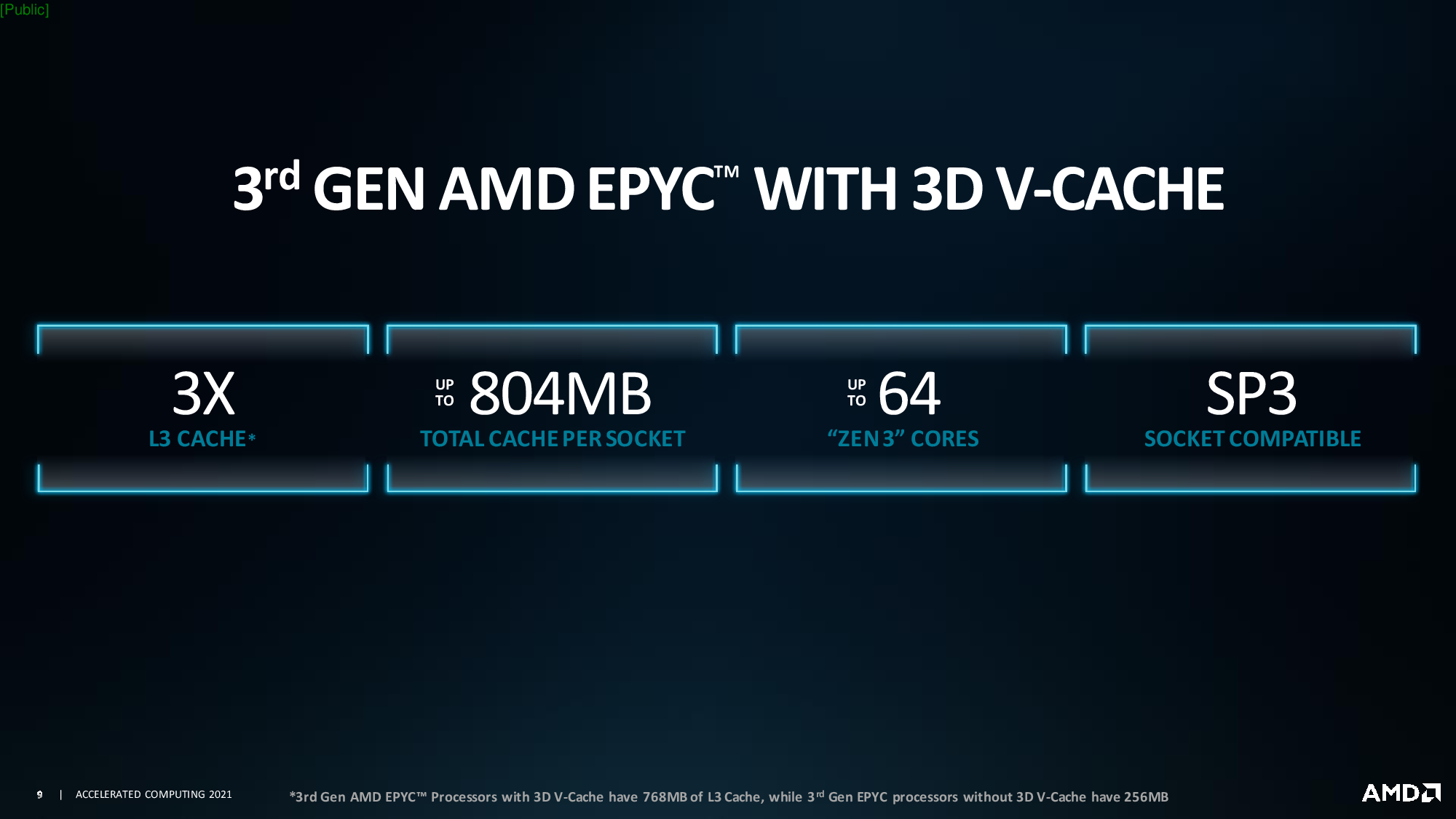
3rd Gen AMD EPYC processors with AMD 3D V-Cache (Milan-X)
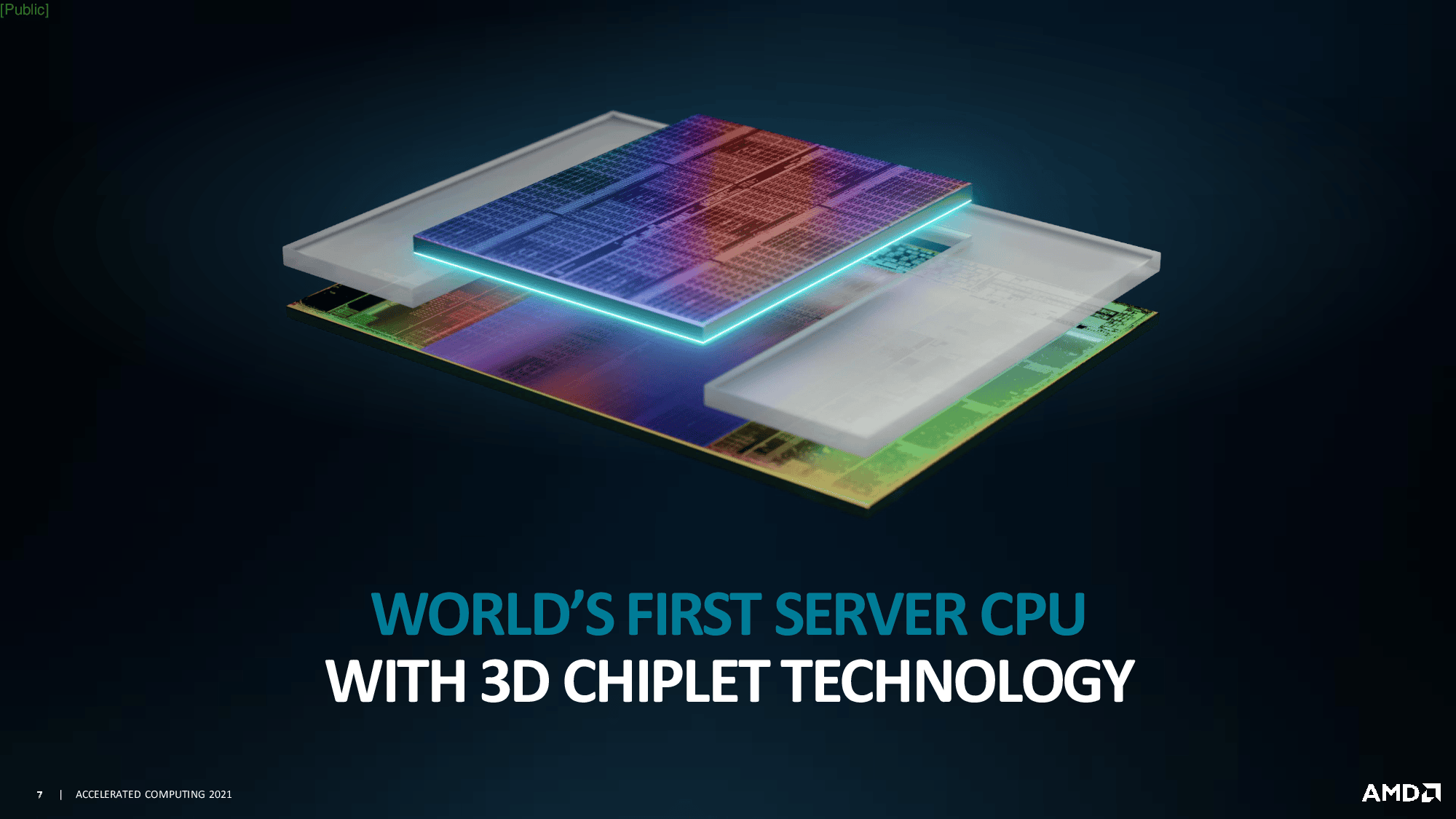
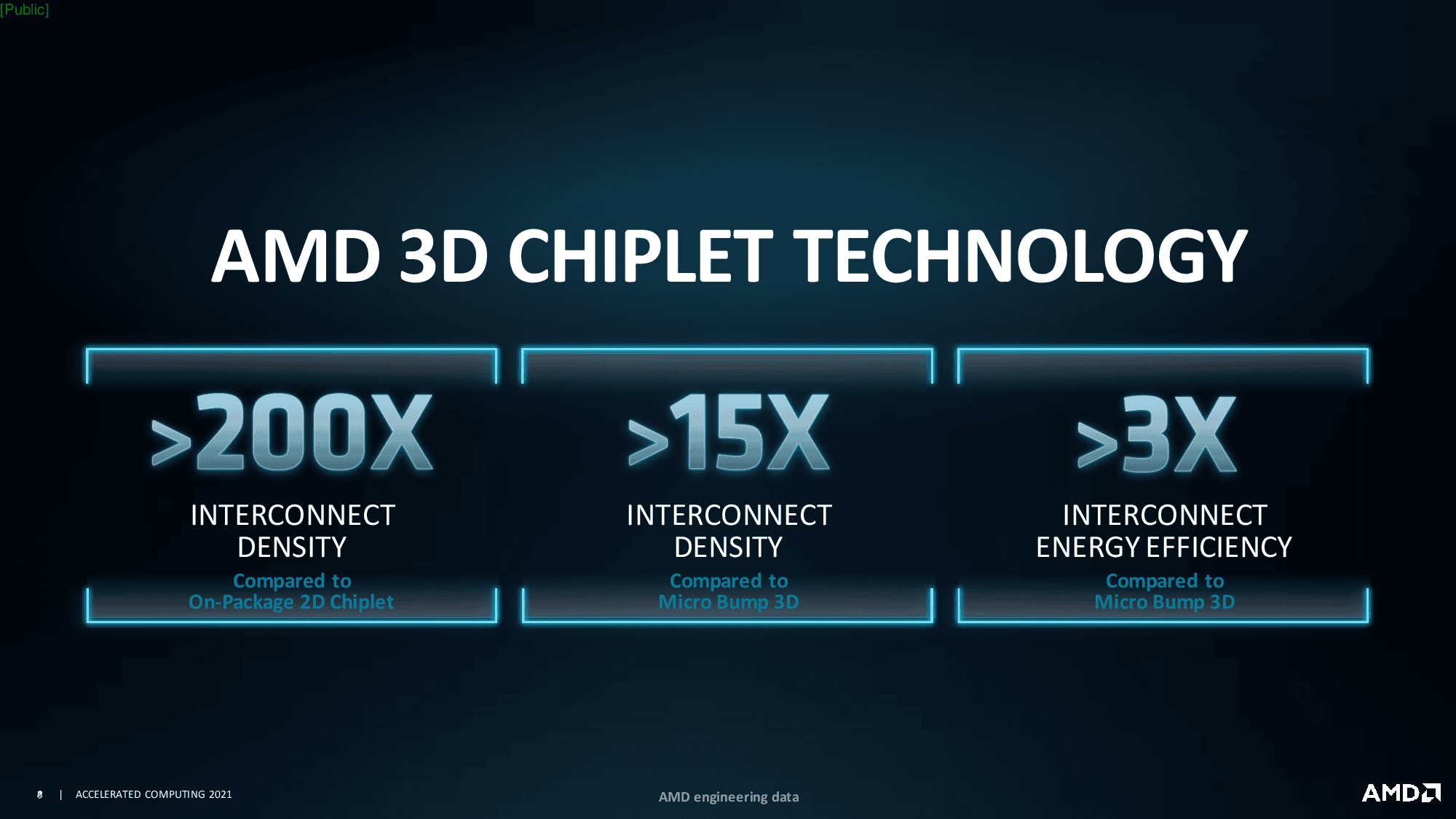
AMD previewed the use of innovative 3D chiplet packaging technology in the data center with the first server CPU using high-performance 3D die stacking. The 3rd Gen AMD EPYC processors with AMD 3D V-Cache, codenamed “Milan-X,” represents an innovative step forward in CPU design and packaging and will offer a 50% average performance uplift across targeted technical computing workloads.
3rd Gen EPYC with AMD 3D V-Cache will offer the same capabilities and features as the 3rd Gen EPYC processors and they will be drop-in compatible with a BIOS upgrade, delivering easy adoption and performance enhancements.
3rd Gen EPYC CPUs with AMD 3D V-Cache will launch in Q1 2022. DALCO is planning to offer server solutions with these processors.
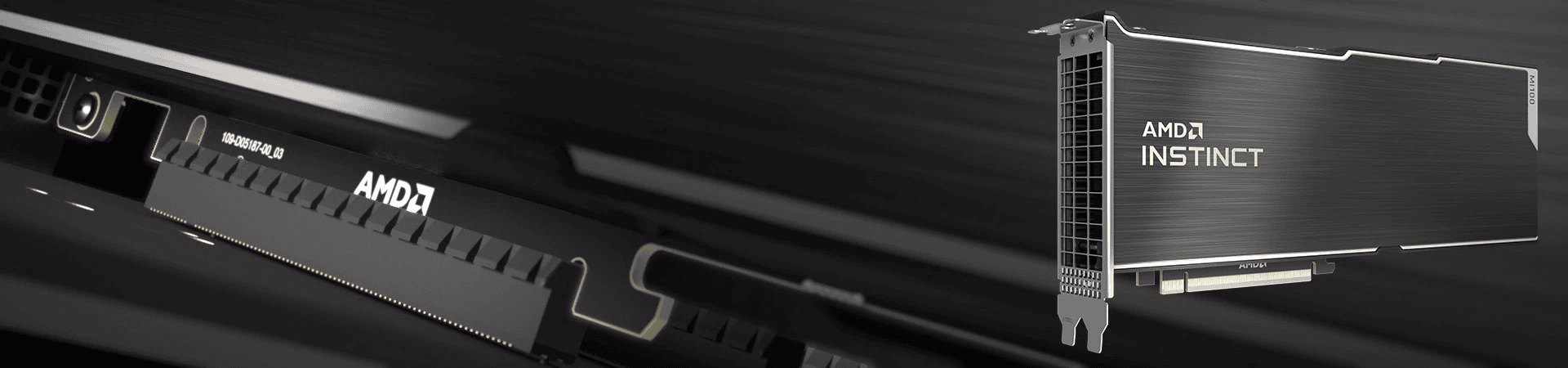
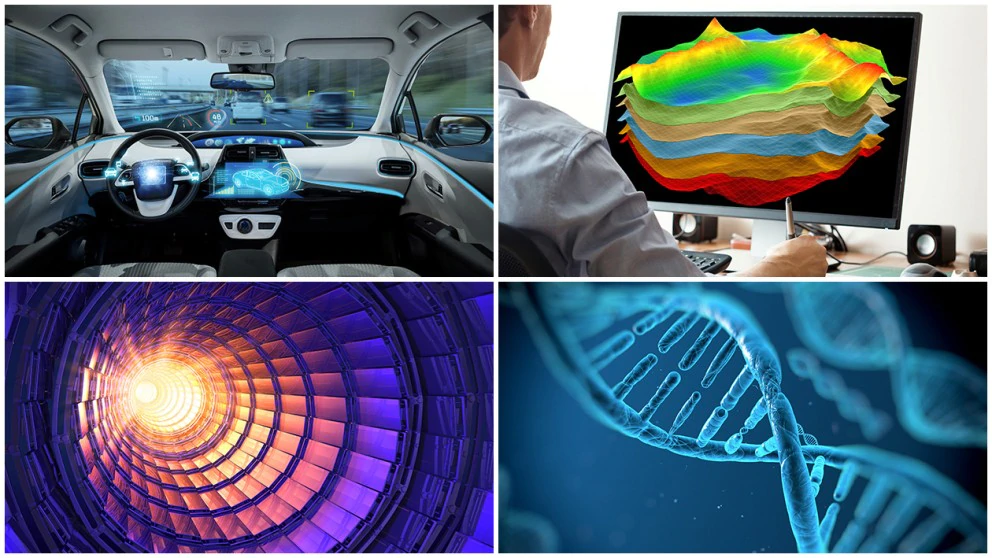
The AMD Instinct™ MI200 series accelerators are AMD’s newest data center GPUs, designed to power discoveries in Exascale systems, enabling scientists to tackle our most pressing challenges from climate change to vaccine research. With MI200 accelerators and ROCm™ 5.0 software ecosystem, innovators can tap the power of the world’s most powerful HPC and AI datacenter GPUs to accelerate their time to science and discovery.
World’s Fastest HPC & AI Accelerator
Powered by the 2nd Gen AMD CDNA™ architecture, AMD Instinct™ MI200 accelerators deliver a quantum leap in HPC and AI performance over existing data center GPUs today. With a dramatic 4x advantage in HPC performance compared to existing data center GPUs, the MI200 accelerator delivers outstanding performance for a broad set of HPC applications. The MI200 accelerator is built to accelerate deep learning training, with the MI250X surpassing 380 teraflops peak theoretical FP16 performance and offering users a powerful platform to fuel the convergence of HPC and AI.
2nd Gen AMD CDNA™ architecture purpose-built to drive discoveries at Exascale for HPC and AI workloads
World’s fastest accelerator, the AMD Instinct MI250X, delivers up to 47.9 TFLOPs peak theoretical double precision (FP64) HPC performance and up to 383 TFLOPS peak theoretical half-precision (FP16) AI performance1
2nd Gen Matrix Core Technology enables the AMD Instinct MI250X to deliver up to 95.7 TFLOPS peak theoretical double precision (FP64 Matrix) performance
With 128GB high speed HBM2e memory, the AMD Instinct MI250 and 250X deliver an industry leading 3.2 TB/s peak theoretical memory bandwidth supporting the most data intensive workloads
Engineered as multi-chip GPU packaging to deliver leading performance efficiency and memory throughput
Innovations Delivering Performance Leadership
AMD innovations in architecture, packaging and integration are pushing the boundaries of computing by unifying the most important processors in the data center, the CPU and the GPU accelerator. With Industry-first multi-chip GPU modules along with 3rd Gen AMD Infinity Architecture, AMD is delivering performance, efficiency and overall system throughput for HPC and AI using AMD EPYC™ CPUs and AMD Instinct™ MI200 series accelerators.
AMD Instinct™ MI200 series accelerators powered by 2nd Gen AMD CDNA™ architecture, are built on an innovative multi-chip design to maximize throughput and power efficiency for the most demanding HPC and AI workloads
With AMD CDNA™ 2, the MI250 has new Matrix Cores delivering up to 7.8X the peak theoretical FP64 performance vs. AMD previous Gen GPUs and offers the industry’s best aggregate peak theoretical memory bandwidth at 3.2 terabytes per second
3rd Gen AMD Infinity Fabric™ technology enables direct CPU to GPU connectivity extending cache coherency and allowing a quick and simple on-ramp for CPU codes to tap the power of accelerators.
AMD Instinct MI250 accelerators with advanced GPU peer-to-peer I/O connectivity through eight AMD Infinity Fabric™ links deliver up to 800 GB/s of total aggregate theoretical bandwidth.
The Frontier supercomputer, one of the first Exascale supercomputer, is the first to offer a unified compute architecture powered by AMD Infinity Platform™ based nodes.
Ecosystem without Borders
AMD ROCm™ is an open software platform allowing researchers to tap the power of AMD Instinct™ accelerators to drive scientific discoveries. The ROCm platform is built on the foundation of open portability, supporting environments across multiple accelerator vendors and architectures. With ROCm 5.0, AMD extends its open platform powering top HPC and AI applications with AMD Instinct MI200 series accelerators, increasing accessibility of ROCm for developers and delivering leadership performance across key workloads.
AMD ROCm™ – Open software platform for science used worldwide on leading exascale and supercomputing systems
ROCm™ 5.0 extends AMD’s open platform for HPC and AI with optimized compilers, libraries and runtimes adding support for MI200
Open & Portable – ROCm™ open ecosystem supports heterogenous environments with multiple GPU vendors and architectures
ROCm™ 5.0 library optimizations using new MI200 features: FP64 Matrix ops, reduced kernel launch overhead, Packed FP32 math and FP64 atomics support
ROCm™ 5.0 extends access of AMD accelerators from the data center to the desktop, enabling workstation ROCm support with Radeon™ Pro W6800 GPUs.
Through the AMD Infinity Hub, researchers, data scientists and end-users can easily find, download and install containerized HPC apps and ML frameworks that are optimized and supported on AMD Instinct™ MI200 and ROCm™.
Total Cost of Ownership (TCO) Drives the Data Center Architecture
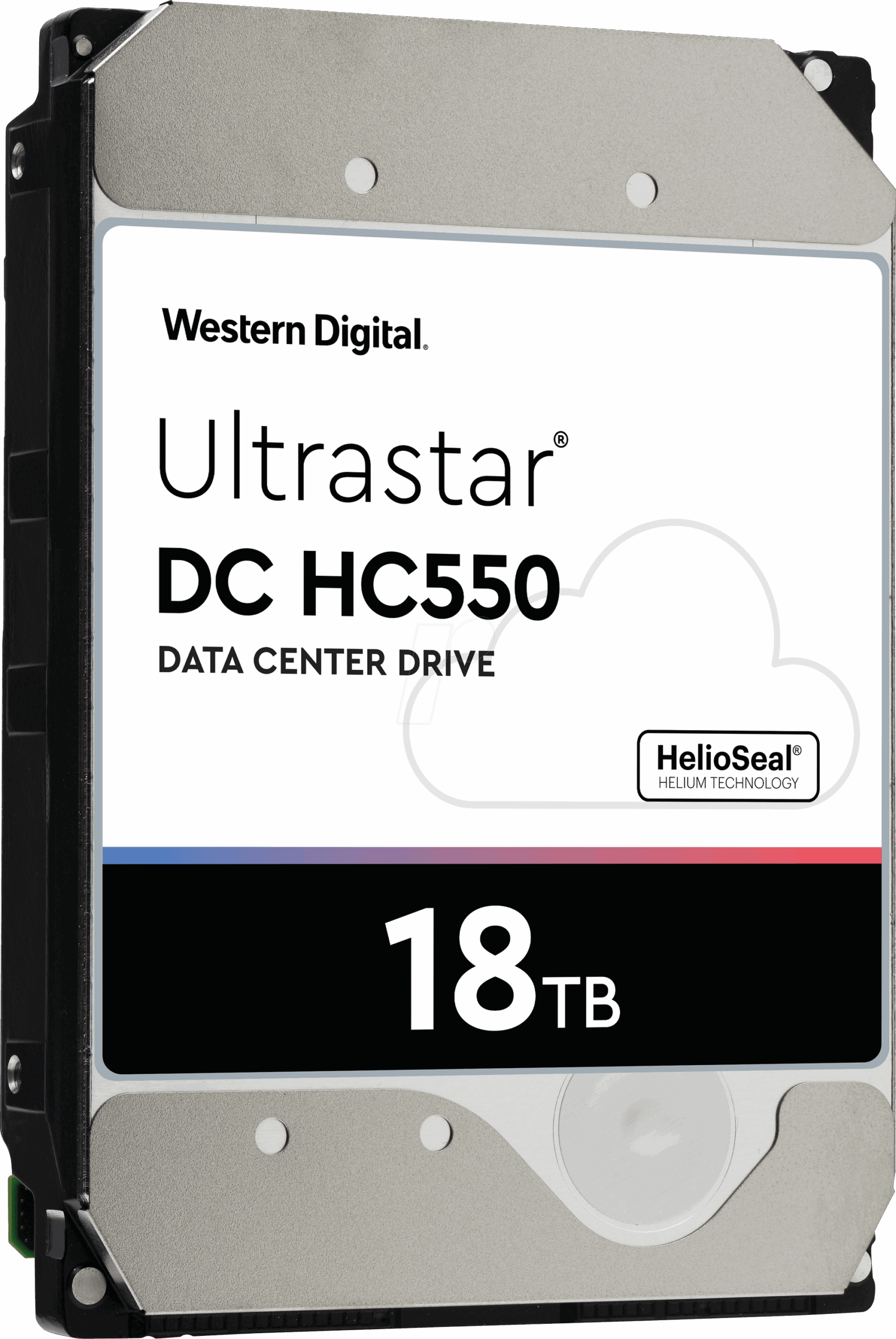
Data center decisions are driven by TCO. Higher capacity hard drives play a leading role in reducing TCO. An 18TB data center HDD provides 29% more capacity in the same form factor as a 14TB HDD. Higher capacity HDDs enable data centers to lower CapEx by reducing supporting hardware and system level costs when compared to lower capacity drives. Helium-sealed, low power, high reliability drives reduce energy and maintenance costs, contributing to OpEx savings. For example, a data center using 18TB HDDs vs. 14TB HDDs requires 22% fewer racks while consuming 21% less power per TB at idle, resulting in significant overall TCO reduction for data center environments.
Raising the Capacity Bar with New Technologies
Ultrastar DC HC550 integrates a suite of technologies on a 9-disk platform to create a new class of HDDs. 18TB capacity is achieved by combining technologies that improve areal density working together with technologies that improve performance and reduce power consumption.
The first HDD in the industry to harness Energy-Assisted Magnetic Recording (EAMR) technology improves writability and therefore increases areal
The industry’s first Triple Stage Actuator (TSA) enhances head-positioning accuracy, delivering better performance and increased areal
HelioSeal® technology is the foundation for Western Digital’s high capacity HDDs and this is the 6th generation of HelioSeal Western Digital has shipped >65 million HelioSeal products to date.
Trusted Reliability and Quality for Data at Scale
With its massive capacity and 2.5M MTBF (projected) reliability rating, the Ultrastar DC HC550 is ideal for object storage implementations. Object storage systems with erasure coding provide better data durability compared to RAID systems, given their tolerance for simultaneous error conditions.
The DC HC550 offers security and encryption options to help protect data from unauthorized use, including SED models in both SATA & SAS. A SED-FIPS will be available in a SAS configuration.
Trust Western Digital and the Ultrastar DC HC550 hard drive to deliver highest capacity, lower TCO and more value to your data center.
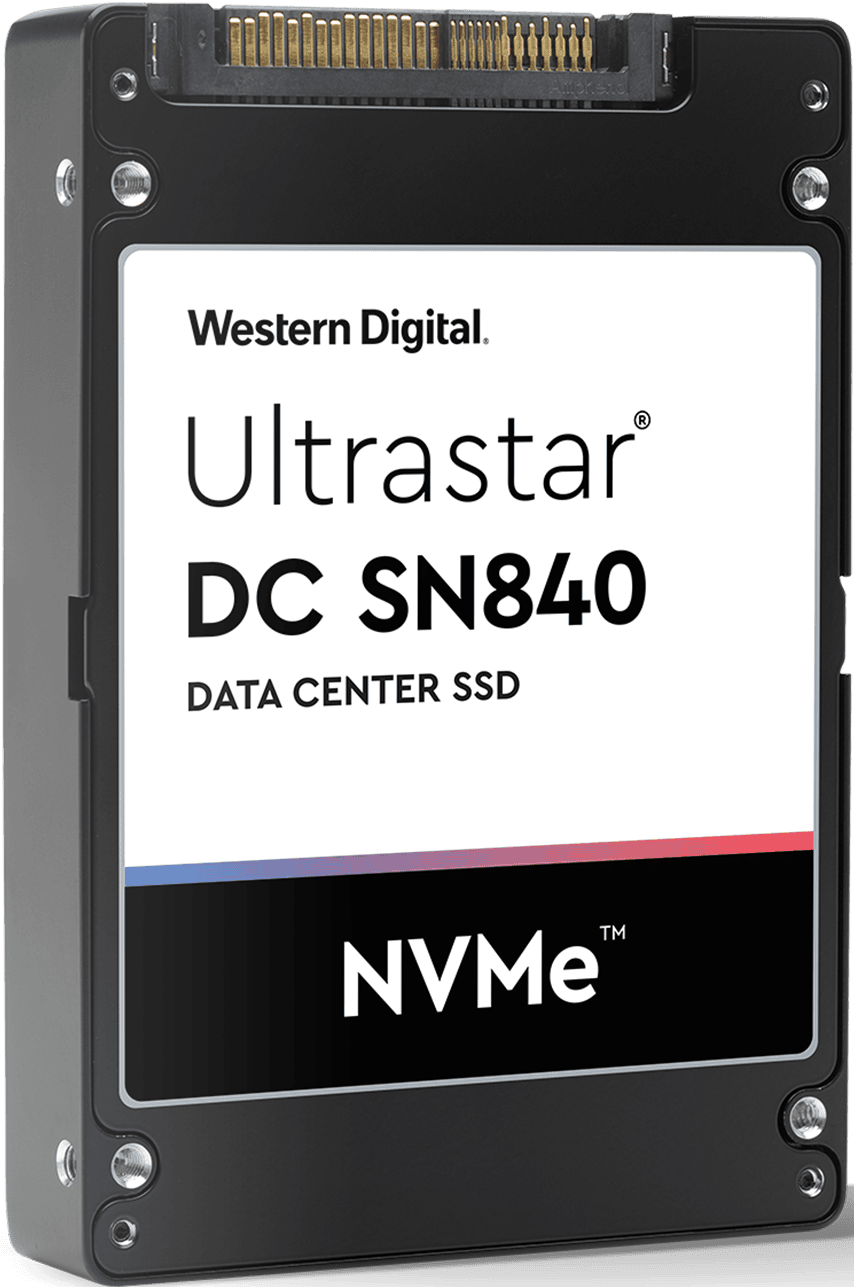
NVMeTM adoption in the data center continues to grow as modern applications and workloads demand more performance. Performance NVMe SSDs are designed for primary storage for HPC servers and primary storage in external storage arrays. Performance NVMe SSDs target cloud compute and enterprise workloads that require low latency to data and high availability of data. These applications include real-time data analytics, cloud computing, OLTP/OLAP databases, artificial intelligence (AI), machine learning (ML), pattern recognition and virtualization. The Ultrastar DC SN840 is Western Digital’s 3rd generation of performance NVMe SSD for data center with PCIe Gen 3.1 (dual-port), NVMe 1.3, providing up to 3,470/3,330 MB/s Sequential Read/Write and up to 503K IOPS mixed random 70/30 read/write performance.
Dual-port Leadership
Ultrastar DC SN840 extends Western Digital’s leadership in dual-port architecture by vertically integrating proven flash controllers. Dual-port high availability supports two redundant paths to the SSD and is critical to ensuring access to data in the event of a failure in the data path.
Quality, Reliability and Security
Ultrastar DC SN840 is built on Western Digital’s 96-layer 3D TLC NAND, with capacities up to 15.36TB in a U.2 2.5” form factor. It offers two endurance classes for workloads; 1 DW/D for read intensive workloads common with the majority of enterprise applications and cloud services and 3 DW/D for higher write or mixed use workloads such as running SQL. The DC SN840 has a five- year limited warranty with enterprise reliability MTBF of 2.5M hours (projected). The DC SN840 offers security options with Secure Erase (SE), Instant Secure Erase (ISE) with an AES-256 encryption engine, TCG Ruby and FIPS 140-2 validation (forthcoming).
3rd Gen Intel® Xeon® Scalable processors deliver industry-leading, workload-optimized platforms with built-in AI acceleration, providing a seamless performance foundation to help speed data’s transformative impact, from the multi-cloud to the intelligent edge and back.
Enhanced Performance: Delivers multi-socket core count density with up to 28 cores per processor and up to 224 cores per platform in an 8-socket configuration, driving enhanced performance, throughput and CPU frequencies compared to 2nd Gen Intel® Xeon® Scalable processors.
Enhanced Intel® Deep Learning Boost (Intel® DL Boost) with VNNI and New bfloat16: Enhanced Intel® Deep Learning Boost with the industry’s first x86 support of Brain Floating Point 16-bit (blfoat16) and Vector Neural Network Instructions (VNNI) brings enhanced artificial intelligence inference and training performance, delivering up to 1.93x more AI training performance vs. the previous generation.1
More Intel® Ultra Path Interconnect (Intel® UPI): Up to six Intel® UPI channels increase platform scalability and improve inter-CPU bandwidth for I/O- intensive workloads versus the previous generation, offering the perfect balance between improved throughput and energy efficiency.
Increased DDR4 Memory Speed & Capacity: Memory subsystem enhancements include support for up to 6 channels of DDR4-3200 MT/s and 16Gb DIMMs, with up to 256GB DDR4 DIMMs per socket.
Intel® Advanced Vector Extensions 512 (Intel® AVX-512): Intel® AVX-512 boosts performance and throughput for the most demanding computational tasks in applications, such as modeling and simulation, data analytics and machine learning, data compression, visualization and digital content creation. Now available with up to 2 Fused Multiply Add (FMA) instructions, beginning with Intel® Xeon® Gold 5300 processors.
Support for Intel® Optane™ SSDs and Intel® QLC 3D NAND SSDs: Delivers industry-leading combination of high throughput, low latency, high QoS, an ultra-high endurance to break through data access bottlenecks. With low-latency NVMe* interconnect, Intel’s low-overhead storage software and our most advanced TLC 3D NAND, the all-new Intel® SSD D7-P5500 & P5600 series are designed to support the intense I/O requirements of AI and analytics workloads in data center and edge deployments.
Up to 1.93x more AI training performance for image classification vs. prior generation
Up to 1.92x higher cloud data analytics performance vs. 5-year old 4-socket platform
First Data Center GPU to Surpass 10TF FP64 Barrier
Accelerate Your Discoveries
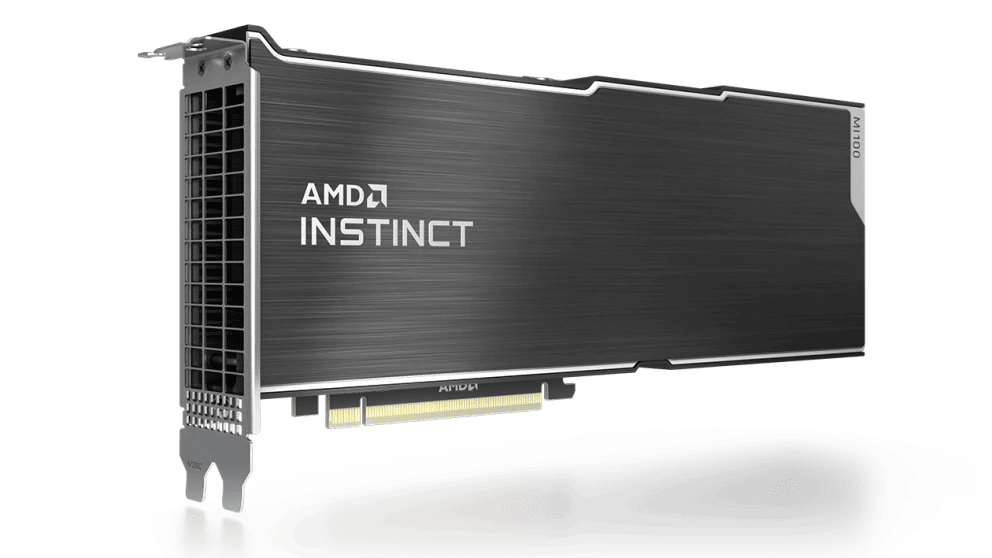
AMD Instinct™ MI100 accelerator is the world’s fastest HPC GPU, engineered from the ground up for the new era of computing. Powered by the AMD CDNA architecture, the MI100 accelerators deliver a giant leap in compute and interconnect performance, offering a nearly 3.5x the boost for HPC (FP32 matrix) and a nearly 7x boost for AI (FP16) throughput compared to prior generation AMD accelerators.
MI100 accelerators supported by AMD ROCm™, the industry’s first open software platform, offer customers an open platform that does not lock customers into AMD solutions, enabling developers to enhance existing GPU codes to run everywhere. Combined with the award winning AMD EPYC™ processors and AMD Infinity Fabric™ technology, MI100-powered systems provide scientists and researchers platforms that propel discoveries today and prepare them for exascale tomorrow.
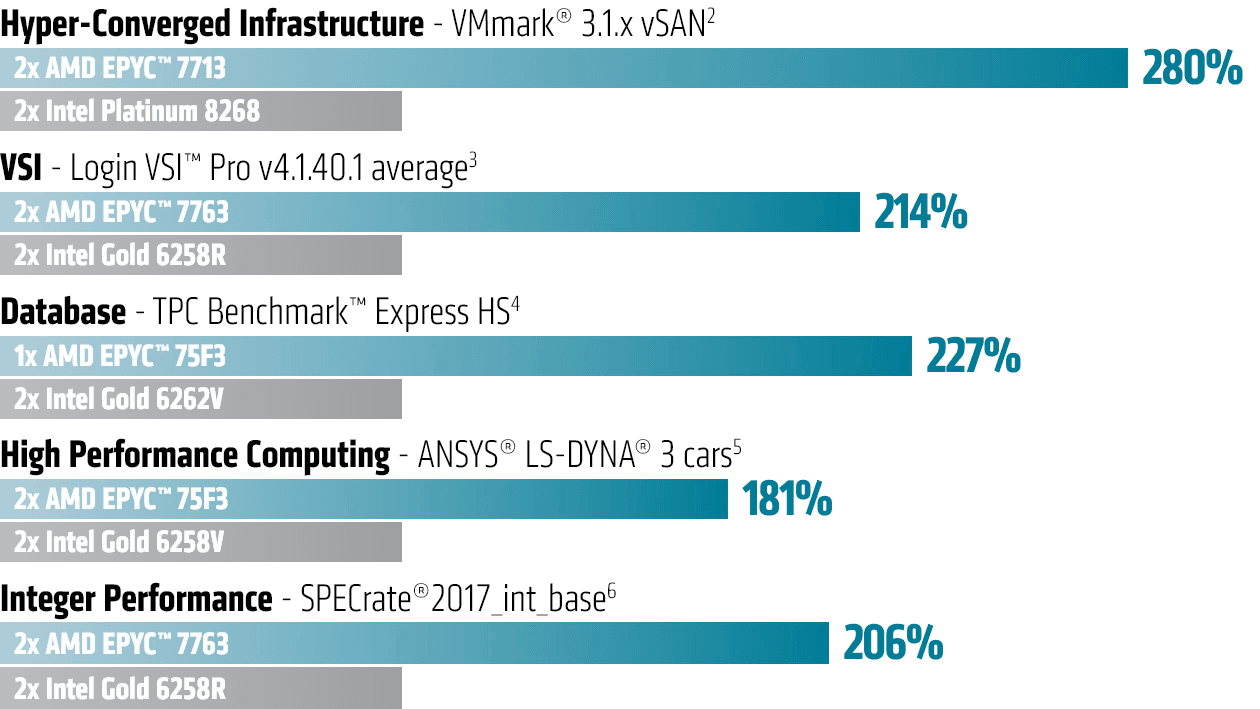
AMD is delivering on their promise to continuously drive innovation to help solve the world’s biggest challenges, AMD introduces the new 3rd Gen AMD EPYC™ server processors, featuring the EPYC™ 7763 the world’s highest performing server processor1. AMD EPYC™ 7003 Series helps elevate your business productivity by enabling faster application performance.
Workload Performance Leadership
Powering solutions in the Cloud, on-prem or off-prem, in containers, or VMs. Whether on bare metal or HCI, AMD EPYC™ 7003 Series provides outstanding performance across the wide spectrum of industry standard applications.
As the leader in high-performance computing, AMD continues to raise the bar for data center computing delivering on its continuous roadmap execution and commitment to innovation.
The Secret is Under the Hood
Built on the “Zen 3” core and AMD Infinity Architecture, the new AMD EPYC™ 7003 Series processors provide a full feature set across the stack with industry leading I/O, 7nm x86 CPU technology and an integrated security processor on die. EPYC™ 7003 CPUs provide up to 32MB of L3 cache per core, 4-6-8 memory channel interleaving designed for better economies and performance in multiple DIMM configurations, plus synchronized clocks between fabric and memory, all driving better, faster time to results.
Capture the Full Benefits of your IT Investments
From traditional application deployment to the latest innovations, with AMD EPYC™ 7003 processors you have the system resources and capacity your applications require.
AMD is constantly increasing their software optimization footprint to help ensure applications leverage all the innovations of AMD EPYC™ processors. For example, as of January 2021, there are over 132 AMD EPYC™ powered VMware® certified platforms. The broad ecosystem and support for open tools and libraries are more reasons why top cloud providers are choosing AMD.
Delivering the results you need, when you need them, AMD EPYC™ powered servers help you capitalize on business impact quickly across your enterprise – no matter how, where, or when your applications run.